Showing posts with label Socially Responsible Investing. Show all posts

Wednesday, August 23, 2017

Can vegans eat this stuff ?


Now that there may be lab-grown meat, the question is whether or not Vegans will feel compelled to eat such a product . The lab-grown meat would still be as if one were actually eating real animal meat.

https://www.livekindly.co/meat-company-bill-gates-lab-grown-meat-investors/

Co-Founder, Co-Editor & Journalist - LIVEKINDLY
Memphis Meats, an alternative meat startup, has recently finished a round of fundraising and they gained support from some big names. Major meat packer, Cargill was one of the contributors to the $17 million that the company obtained. Alongside Cargill, Bill Gates and Richard Branson also chose to invest in the company.
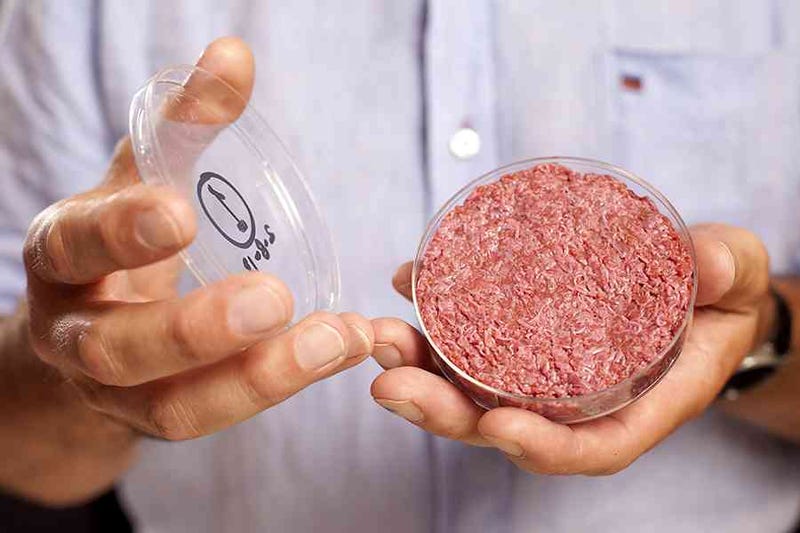
Memphis Meats are currently working on lab grown meats. This meat is grown in tanks from the cells of the animals that the meat traditionally comes from. These cells are then fed nutrients in order to grow muscle tissue which will then be consumed as meat. Although their product isn’t available on the market yet, they have successfully produced chicken, beef and duck.
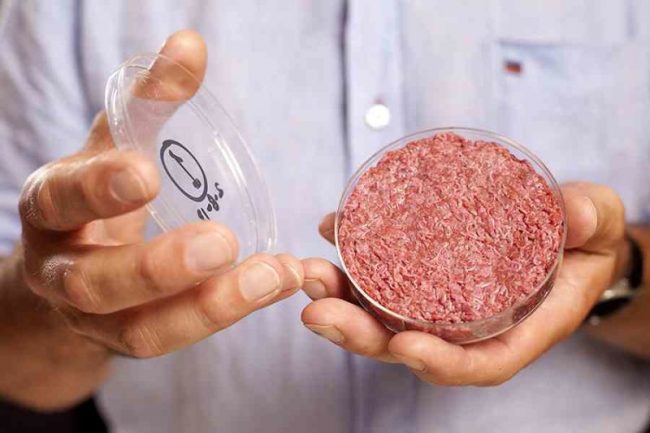
Startups like Memphis Meats aim to solve the world’s protein problem. Currently, the earth’s population are consuming more meat than is sustainable. Animal agriculture is devastating to the environment. As the earth’s population is set to increase until 2050, and the world’s appetite for meat continues to grow, this is presenting a huge problem.
Many people have turned to a plant-based diet to tackle the issue, but for people who love the taste of meat, they can’t see this being an option. Companies Impossible Foods and Beyond Meat have both created burgers out of plants that are supposed to replicate ‘the real thing’. However, for some people Memphis Meats’ creations might be one step closer to the real thing as it is grown out of the same cells that can be found in the meat they currently buy.
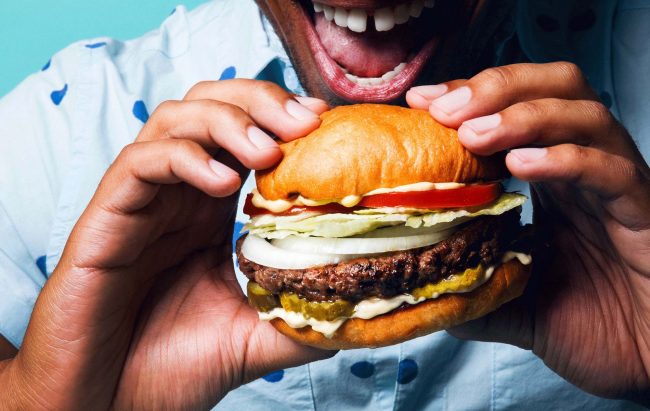
Cargill’s decision to invest in Memphis Meats, and expand[ing]’ their consumers ‘protein choices, mirrors Tyson’s move to invest in Beyond Meat. This suggests that meat companies are experiencing the effects of the public’s changing opinion on meat.
Although some animal rights activists are still concerned about the ethics of lab grown meat, it could be seen as a stepping stone to reducing the harm caused to animals. If lab grown meat became popular, as big investors appear to believe it will, it could dramatically reduce the number of farms which would have a positive ethical and environmental impact.

Image credit: Flickr | Gizmodo | Impossible Foods


Sunday, May 14, 2017

Why I became a Vegetarian


The probability of a SRI investor being a vegetarian is higher than for non-SRI investors.  How much higher, I don’t know.  But it seems logical that SRI investors that are more aware of the bigger society and negative derivative effects from large farm factories, etc. would be inclined to abstain from eating animals.

Below is a transcript from a speech I gave at a local Toastmaster’s club:


Good evening fellow Toastmasters’ and guests.  Tonight, I’m going to talk to you, perhaps convince you, or even better, inspire you to become a vegetarian. 

In my personal experience, people are extremely sensitive about what they eat so I wasn’t sure about speaking about this.  I’d add “eating habits” to the list of taboo topics to bring up at a dinner party, like politics, religion and money.

But wait a minute…..EVERYONE lately seems to be talking about Trump, so then maybe I can talk about my eating habits.


Introduction:
As a background, let me give you a brief definition of a vegetarian and derivations of that:
·      Vegans:  don’t eat ANY animal products including dairy products
·      Pescetarian:  eat fish but no other meat
·      Ovo-Lacto:  don’t eat meat but eat eggs & dairy (that’s me)
·      Fruitarians: only eat fruits and nuts.  These are the hippies of the world
·      Also, some vegetarians don’t use animal byproducts (e.g., leather)

I started being aware of vegetarianism when I was dating a girl who was one.  For me, vegetarians were like other-worldly religions.  I knew that they were out there, but I never had to think about it.  My girlfriend was kind of preachy about it and her anti-American antics. 

One time we were on vacation in Poitou-Charentes, which is a beautiful region on the west coast of France that’s known for its oysters and mussels.  So while restauranting, I did my proper duty and ordered a plate of oysters.  As I was enjoying my freshly shucked oysters my girlfriend critically noted how if I looked closely I could still see them wiggling.  Needless to say, it was years later until I became a full fledged vegetarian (2010).  (Reminder:  Nobody likes being preached too!)


The process of becoming a vegetarian was easier than I expected.  What’s helped me become disciplined in many aspects of life is not becoming hung-up or guilty if I had wanted to eat meat on some days. 

Here is a list of pros/cons of why I am a vegetarian.

Positives:
·      You are saving countless lives of animals
o  When I first realized, as a young boy, that my dinner was once a living breathing animal, like our family cat.   I rationalized that they lived tranquil lives on pastoral farms, but in fact they lived in prisons called factory-farms.
o  I will not show you any gruesome photos.  That, my friends, is only a Google search away.
·      Your energy footprint declines substantially.  Here are some key facts from vegetarian.procon.org:
o  Over 10 pounds of plant protein are used to produce 1 pound of beef protein
o  It takes 2,500 gallons of water to produce one pound of beef and it takes only 220 gallons of water to make a pound of tofu.
o  Did you know that the livestock industry produces 18% of all greenhouse gases?  That’s more than all forms of transportation COMBINED.
·      You are more accepting and empathetic of others’ dietary restrictions
·      May prevent certain diseases
·       Helps keep down your body weight
·      Your skin even starts to look more “glowy”.  I’m starting to sound like a TV commercial…
·      TMI Alert:   Pooping becomes a lot easier and an overall smoother process
·      You give up fast-food almost instantly.  Few fast-food restaurants have veggie options.


Some drawbacks:
·      Everyone and their mother asks why you don’t eat meat
·      You come across as thinking that you are better than everyone else
·      Vegetarian restaurants can be pricey
·      There are some detrimental health effects if you don’t get enough B12 or protein
·      Choosing what to buy is a lot of work, but this burden is what it’s all about
o  When I good food shopping I have to read the labels carefully.  The same thing goes when dining.  I can’t simply order a French Onion soup because after doing some research I discovered it’s not just Onion and cheese.  It has a beef broth base.
·      People may view you as “not normal”
o  Definition of normal:  conforming to a standard, or the common type (“commoner”)
o  Noun: the average or mean
o  In Mathematics:  being at a right angle

Some of you may remember my first speech, the icebreaker, in which I described growing up in a “parochial” “small town” in the Bronx.  There, parochial wasn’t just the name of the catholic school I attended but a way of thinking.

I rarely questioned anything and was taught to be highly obedient to authority.  But then something magical happened when I became a vegetarian…  I starting thinking because I had to !

The process of identifying vegetarian ingredients in cookbooks, reading labels etc.., grew into questioning every page of my life.  It was like Peeling an onion to find the truth.  Since then, I’ve never looked back.  When I delve into an issue, I don’t just look at it from a right angle.  Instead, I look at it from all sides including secondary and tertiary affects.

Hmm…maybe I should have changed the title of this speech from Why I became a vegetarian to How becoming a vegetarian changed my life.

Friday, November 27, 2015

Christmas Trees: What Would Jesus Do?


- by Maryann Khinda


 We are republishing this piece given the Christmas Season...

Is sacrificing trees for decoration rather than consumption ethically and morally responsible?  Is this act frivolous and wasteful?  Would Jesus approve?  Or are there hidden merits to cutting down Christmas trees?

In light of our socially responsible efforts, we would like to explore the pros and cons of purchasing a real vs. artificial Christmas tree this holiday season to see where the pine needles lead us.

 There are many views and thoughts on having a “real” Christmas tree. Besides the beautiful décor and terrific nostalgic smell, freshly cut Christmas trees provide additional oxygen and consume carbon dioxide in the immediate air of their surroundings.  As per Green America, Tree farms typically use barren un-farmable or rocky land to raise their Christmas trees and grow two trees to every one tree cut.  This is a sustainable method of using the land and a true benefit to having a “real” tree.

Ah, but the cons outweigh the pros.  Why do any trees need to be cut?  We are killing trees, living specimens, for a tradition...?  Here lies nothing but selfish human gain in the act of cutting down trees.  We bring these trees into our homes for a few weeks, decorate them and then use additional electricity to light them.  This is absolutely wasteful!  And not socially responsible?  After the holidays are over, the trees typically wind-up in landfills.  Most Christmas trees are brought from these mass tree farms that use pesticides.  These pesticides are in the air in your home.  If your pet drinks from the tree’s bowl, it could get sick.  Trees even breed mold, which is unhealthy to breathe and creates allergies.

We are not asking you to give up your tradition.  There are alternatives: the United Kingdom has found a unique method which we approve and give two thumbs up for as 100% sustainable – renting potted Christmas trees.  During the holiday season, customers can rent a potted freshly pruned and trimmed Christmas tree.  When the season is over, the tree will be returned and replanted until the next season.  Brilliant!  No waste!

There are also SERFs, Socially and Environmentally Responsible Farms, which raise organic Christmas trees.  Organic trees are free of harmful pesticides.  At this time SERFs are only common in the Northwest.  Please see their site for further details.
 
 If you must have a “real” Christmas tree this season, we strongly urge you to adhere to the many recycling efforts available.  Most local governments and municipalities participate in tree curbside pickups for compost and mulching.  If this is not available, there are other great ideas that are sustainable. Using your tree for firewood has mixed reviews – please make sure you do this correctly as you could ruin your chimney (see this page for details on the dangers).  There is always the easy option of throwing the tree into your backyard for your own composting.  This will, in time, improve your own garden.  Mother Earth News gives a few great suggestions:  in the winter, you can use the tree branches to protect your delicate garden and use the trunk as a post or bench.  You could also throw the tree in your lake or pond – the wildlife will thrive.

The other option is buying an “artificial” or plastic Christmas tree.  Artificial trees can be reused year after year, without waste as a whole, but these trees cannot be recycled further due to their iron and plastic structure (though there are other materials used, e.g., aluminum).  Also they contain PVC (polyvinyl chloride) and the production process may use a small amount of lead.  While the risk of lead poisoning is low, it increases as trees age. Though recent regulations have made trees safer.

In conclusion, we find freshly cut Christmas trees not to be as socially responsible as some of the alternatives, such as renting or purchasing potted or artificial Christmas trees.   As we like to present other opinions, Justmeans, a Sustainability website, did a write-up (Sustainability and Christmas Trees: Let's Get Real) not too long ago stating real trees are the way to go.  If you must have a freshly cut tree, please utilize one of the recycling methods above to retain some sustainability.  Happy Holidays!


Labels:
SRI, Socially Responsible trees, sustainability, Green Christmas trees. 

Wednesday, October 14, 2015

How Socially Responsible Investing Changed the World


Source: Nick Ut at the Associated Press

Recently a smug investor asked me, "What's SRI good for other than making one feel less guilty about living a fancy lifestyle." After hearing that remark, I was really angry repeating it over and over in my mind.

After several weeks I got to thinking, "maybe he's got a point.  I'm a limousine liberal not having really dirtied my hands in any good cause."

But first, a brief history and explanation.  SRI stands for Socially Responsible Investing.  SRI has had many names including:
  • Ethical Investing
  • Impact Investing
Historically, SRI was mostly about avoiding "sin stocks", companies that are involved with alcohol, gambling, pornography, tobacco and (nuclear) weapons.   But today's SRI isn't just about avoiding certain industries, but about investing in companies that are doing positive practices and having specific attributes (i.e., "best in class"). These practices fall under three areas, called ESG (Environmental, Social, Governance). Here, SRI has made substantial progress.

So, I started wondering, reading books, watching interviews and keeping up with headline news to determine if SRI was in fact doing some good in society.

Usually when an issue captures our minds, we contemplate supporting or opposing it through voting, how we act as customers (e.g., buy), or how we act as employees (e.g., strikes, unions).  Seldom do we think of our roles as investors.  The fact is, while we are intrigued by certain investments in companies like Tesla, most of us invest indirectly via mutual funds. So the link between companies and ourselves is broken.


I came up with a list of three important successes going back to the first example of modern-day SRI:

  • In 1758, the Religious Society of Friends (aka "Quakers") prohibited its members from participating in the "slave trade."  Another religious order, the Methodists was highly influenced by John Wesley whose sermons said that your business shouldn't harm its workers or its neighbors.
  • In 1972, the country was outraged by the photo of a 9 year old girl that had just been burned by Napalm, which is a burning agent.  This ignited a protest, placing pressure on its sole maker, Dow Chemical, to stop producing the chemical-agent. Napalm was only 1% of its revenues, as the company was known for Saran Wrap. While the company refused to stop making Napalm talent veered away from Dow and the company was vilified for years. The pictures also prompted Dr. Martin Luther King to go public with his opposition to the Vietnam War.
  • In the 1990s, the world was appalled by Apartheid in South Africa. The movement against Apartheid actually began in 1960 after the Sharpeville massacre. In 1976, the UN imposed an arms embargo to the country. By the late 1980s and 1990s, investors including large institutions, divested all their investments in South Africa. That prompted businesses operating in South Africa to draft a charter to end Apartheid. And you all know the result...
  • 2015: Modern SRI is quite different than in the past. There has been a huge increase in the quality of Governance at most corporations. This has given investors the ability to monitor corporate behavior almost "real-time".  This is done through proxy voting, oral dialogue, letter-writing, filing shareholder resolutions (usually a last resort) etc...At first glance, it appears that SRI hasn't had any "big-wins" since the 1990s, but in fact, investor activism has been so strong that few companies get to the point where there is a big issue to topple.


2015 - 2020: The Next Battleground:
The Palm tree is a beautiful, elegant species and Palm oil is supposed to be a healthier oil compared to trans fats. However, ever expanding plantations are endangering Orangutangs, increasing Green House Gases as well as taken advantage of hungry workers.

In the next article, I will dig deeper into these issues.  But for now, I'll leave you with some wise words from Mohandas Gandhi:

 "You must be the change you wish to see in the world.  

 It's the action, not the fruit of the action, that's important. You have to do the right thing. It may not be in your power, may not be in your time, that there'll be any fruit. But that doesn't mean you stop doing the right thing. You may never know what results come from your action. But if you do nothing, there will be no result.” 


Friday, September 14, 2012

Announcement: The Societal Function of Investment Asset Classes: Implications for Responsible Investment

We at Socially Responsible Investing would like to invite everyone to an SRI special event: The Societal Function of Investment Asset Classes: Implications for Responsible Investment.

If you will not be able to attend SRI in the Rockies in early October, we highly suggest attending this.


Press release below:

October 4, 2012
The Initiative for Responsible Investment of the Hauser Center for Nonprofit Management at Harvard University invites all interested parties to attend a conference presenting eight academic papers on the relationship between the societal function of investment asset classes and the theory and practice of responsible investment.

These papers address the ways in which asset classes manifest themselves in the marketplace through investment vehicles, transactions techniques, and regulations aimed at preventing abuse and enhancing socially desirable outcomes, whilst answering the questions of what normative values-specific asset classes have come to embody through regulation, case law, or custom.

Event will feature Keynote Speaker, Professor Amar Bhidé of The Fletcher School of Law and Diplomacy at Tufts University.

To RSVP, please contact Annie Olszewski at annie_olszewski@hks.harvard.edu or by phone at 617.496.2213 as soon as possible due to limited seating. There is no registration fee for this conference.

For more about the event, click here.


Sunday, June 10, 2012

Milking It – The Dairy Industry's Decline & the Rouse to Organic’s Value

by Maryann Khinda


Milk, one of America’s oldest staples, has been in households since the turn of the century.  This was the drink of choice, before the likes of cola or sports drinks.  As you can see below, its height peaked in the 1960’s.  Since then, the milk industry (especially Plain Whole Milk) has been in a gradual decline (click table below).


This decline is risking the livelihood of farmers.  Skimming profits has been increasingly difficult due to the current economic situation.  Dr. Roger Cady’s research (a dairy specialist from Washington State University) surmises farmers are being forced to pack cows and keep larger herds in smaller (and most likely, less green) pastures to turn a profit.  Land is a valuable commodity and getting more out of less acreage yields better profit margins.  The average (family) farm previously had no more than 200 cows and will now wind up at the 300 mark minimum, just to breakeven (see chart)!

From a land and capital perspective, this is more efficient, but what does this mean for the cattle?  Without subsidies or tax incentives from the government, the milking industry will eventually become extinct.  After researching the depressing fate of the milk industry, a friend and I went on pursuit of a sustainable option, if any are left...
We found Ronnybrook Farms - a New York farm that walks the non-organic path.  My friend, whose been slowly moving towards becoming a vegetarian, stumbled upon Ronnybrook at a local Farmer's Market.  He had been thinking of stopping milk consumption after watching a disturbing video on the mega-Dairies of industry.  He decided to taunt and question a Ronnybrook representative (who happened to be the owners' daughter-in-law).  Her answer would be his final justification for not drinking cow juice.  Boy was he in for a surprise!
Ronnybrook has made a commitment to humane treatment of animals as well as sustainability.  There are certainly no economic benefits to keeping such a small farm (the farm only maintains approximately 100 cows in total).  Ronnybrook’s corporate stance is to do right by the animals and this will provide a better end-product for both the environment and for human consumption.
So what is it that makes this farm stand above the rest? 

Socially Conscience:  Ronnybrook still uses glass bottles – recalling one to the days of The Honeymooners TV program.  Ronnybrook’s motto is "Hopelessly out of date, and proud of it.”  Ronnybrook would rather use glass bottles and get more uses from the container and save the environment, than go for the cheaper carton or plastic options.  A sharp contrast to the market trend….

Passion: We actually went on an unplanned tour of the Ronnybrook Farm, in pursuit to verify their claims in regards to the facility and the treatment of animals.  Rick, one of the owners (the Osofsky brothers), actually stopped in the midst of whatever he was doing (he literally left his car running) and joyfully took us on a tour of the facility.  He asked about our backgrounds, etc. before initiating the tour.  And this wasn't just any tour – a two plus hour tour – covering everything from the mechanics of butter churning, chemistry, regulations, the family tree of Holstein breeding, an ice cream sampling (beyond delicious) and a viewing of their magnificent mountain top meadow.  (Remember, all this time, his car was idling.)  You could feel the absolute pride in what they do, which is a rarity to find.  And most importantly, you could feel Ronnybrook was truly a happy place.

Cow Whisperers: The cows are treated like family – where in the world does this happen?  The cows actually have their own mattresses and receive medicine when sick.  Each cow is named by family members, depending on their features and personalities.  There's Trevor, Claire, ToyStory Arrow, and of course, Fric and Frac !  I personally have never seen animals treated so well.  They keep their offspring with their moms after birth, rather than dragging them away as done in industrial farms.  Cows are not stupid, have emotions and often pout for days when their calves are taken from them.  Ronnybrook's pasture and stables were impeccably maintained.  The animals looked clean, healthy and happy!  At the time we visited, the cows were in their stable; however we could tell they were happy because they were quiet and content, though a bit curious of their new houseguests!
Character: This is the mire point, where we get into doing what is right for oneself or one’s bottom-line vs. doing right by the animals, the environment or what others think is just.  Ronnybrook emphatically states that providing medicine to sick animals is MORE humane and that fact is worth not getting the “organic” stamp of approval.  This shows true compassion, but is this a smart business move to lose the “organic” label?  Ronnybrook does not believe the label is worth compromising their prized Holstein cows.  Cattle should be cared for like any living creature - why not help cure them when they're ill too?


This leads us to our next question - is “organic” worth it?  What is the value?  Is it just hype?  Is it really worth paying extra?  As the demand for organic food has risen, prices have remained significantly more than conventional food.  One questions the value, or the cost-benefits that organic foods provide.
The USDA has 4 rules for milk to be considered “organic”:
1.     no bovine growth hormone (BGH)
2.     no antibiotics
3.     no pesticides in cows’ feed
4.     access to pasture

Taking these rules a step further, perhaps there is no added health value to organic milk.  Conventional milk is safe and healthy for consumption:
1. BGH is a protein hormone.  If ingested, our digestive tracts will destroy it.  However, from an ethical point of view, note that BGH leads to higher levels of udder infections.
2. Milk is routinely tested to ensure the milk has no antibiotic content. You cannot purchase milk in the United States with any antibiotics in it!
3. Similarly for pesticides - while there are trace amounts found in regular cow's milk, they are at levels far below what has been established as tolerable for humans.

Organic Milk - Is it worth the cost?

MSNBC covered this topic
at length (see Organic milk: Are the benefits worth the cost? ) and concluded there is no real merit to the value of organic milk, “research does not support a health advantage of organic over conventional milk for any segment of the population. “
Ronnybrook has a long term stand on this issue, and has even made the pages of The NYT:
Our farming methods are by all practical measures organic, if not beyond.  We use no pesticides on our fields, manure is our fertilizer of choice and we use cropping techniques that promote healthy soil.  Our cow’s diet is a healthy, natural one.  We strive every day to make sure yours is too.  So, what is the difference between dairy farming practices at Ronnybrook and practices on organic dairies? Check out the chart below and we hope it is clearer that if dairying organically is a goal to strive for then Ronnybrook has clearly reached that goal and has moved beyond it.“
  
RONNYBROOK FARMS
ORGANIC DAIRIES
Comfort stall barns with individual cow mattresses for every cow
Always
Sometimes
Large confinement barns with as many or more than 5,000 cows
Never
Sometimes
Spend 24 hours a day on concrete paddocks
Never
Sometimes*
Access to pasture or outdoor exercise everyday
Always
Sometimes*
Family farm
Always
Sometimes
Use rBST
Never
Never
Use pesticides
Never
Never
Local
Always
Sometimes
Use antibiotics
Sometimes
Never

After some extraneous researching and soul searching, organic foods feel healthier for the individual and more sustainable for the environment.  Organic milk, though, does not deem that same value in all regards.  Organic appears to be just a label and one needs to dig deeper into the actual practices of the farm or dairy in question.

What are our Conclusions?
·       Milk Consumption, despite all the got milk? ads, is down and does not appear to be coming back.
·       Farmers’ in the milk industry are increasing their herd size and lowering their pasture to cow ratio to yield better profit margins, which goes against the long-term sustainability model.
·       Ronnybrook Farms is maintaining a socially responsible, sustainable non-organic farm, despite the superficial trend that organic dairy is the way to go.
·       Despite the above point, overall, organic foods are healthier for the environment and for the human body.  Though, we urge consumers think through before making purchase decisions and buy from groceries that do.  We believe Whole Foods Markets is a good example.  (Note: Whole Foods is a socially responsible company overall.)
·       Non-organic vs. organic milk differences are minimal according to the cited study.
After taking a tour of Ronnybrook (they strongly encourage their customers to reach out to them to do so) - they are true to their word, cow mattresses and all.  Let’s hope they can stick around for awhile...

Helios and Matheson: I’ve seen this movie before, and it ends badly !

Summary:   My career as a penny-stock equity analyst gives a unique perspective to the issuer  HMNY is insolvent and the likeli...